

National Fire Prevention Week: Test Your Fire Safety Knowledge
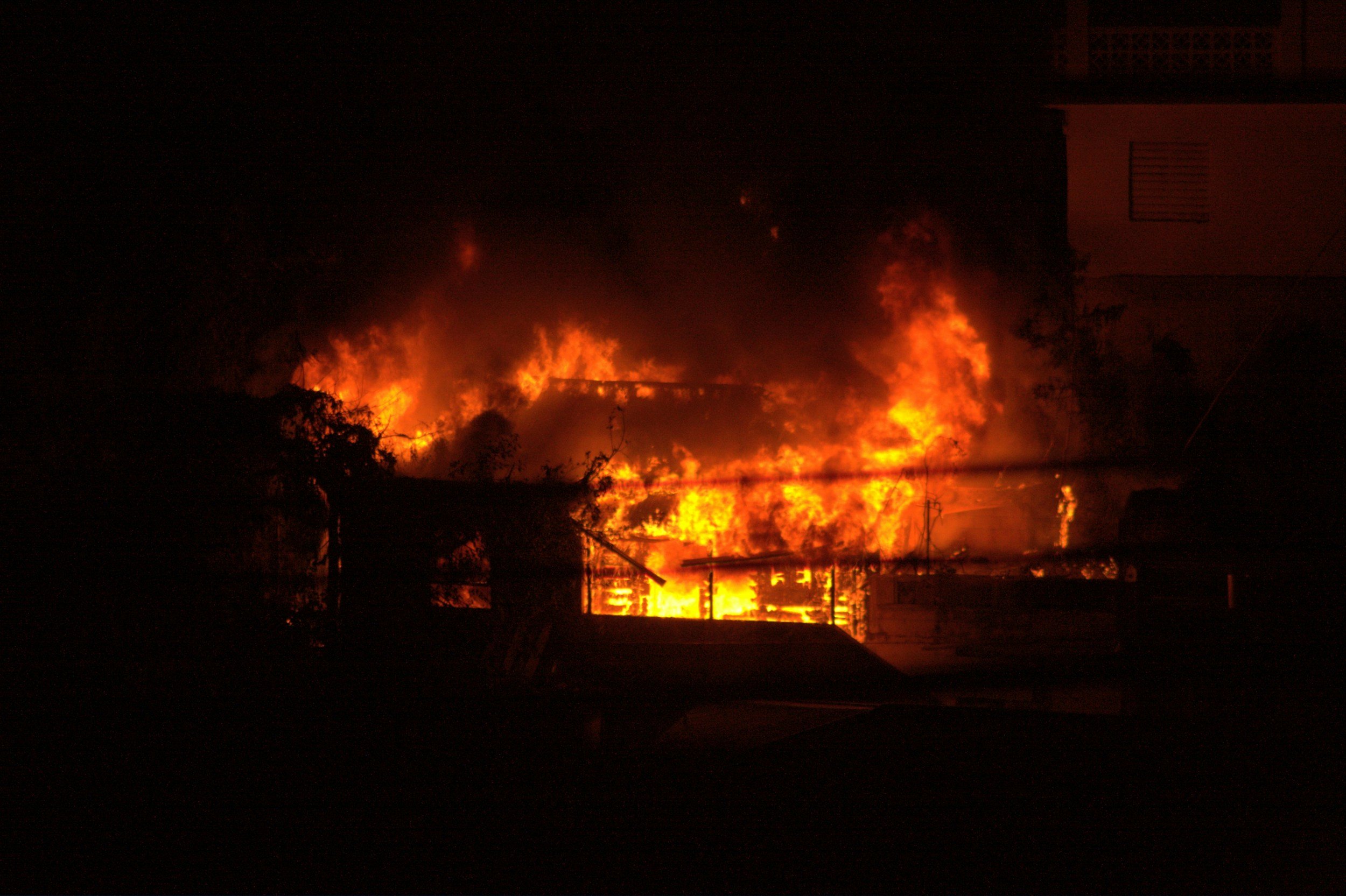
National Fire Prevention Week is here (Sun, Oct 4, 2026 – Sat, Oct 10, 2026). Find out how much you know about fire safety and make a fire escape plan for your family.
If your home caught fire, would your family be prepared to evacuate? Take this quiz to test your knowledge about fire safety. (Answers are at the end. No peeking!)
1. What's the No. 1 cause of house fires?
A. Cooking
B. Smoking
C. Electrical appliances
D. Candles
2. What should you do if your clothes are on fire?
A. Run outside
B. Douse yourself in water
C. Stop, drop and roll
D. Remove your clothes
3. How often should you test the smoke detectors in your home?
A. Once a year
B. Once a month
C. Once a week
D. Only after you install them
4. When using a fire extinguisher, what does the acronym PASS stand for?
A. Pull, aim, squeeze, sweep
B. Point, act, stop, spray
C. Push, angle, spray, sweep
D. Pin, aim, stand, squeeze
5. Where is the best place to install smoke detectors?
A. In the kitchen
B. In the garage
C. In bedrooms and hallways
D. In bathrooms
6. If your house catches fire, where’s the best place to escape from?
A. A window
B. The nearest door
C. Any accessible exit
D. The roof
7. Water can be used to put out any type of fire.
True or false?
8. How often should you practice your fire escape plan?
A. Once a year
B. Once a month
C. Twice a year
D. Every other year
9. If you hear a smoke alarm, you should always leave the building immediately.
True or false?
10. How much time do you have to escape from a typical house fire?
A. 10 minutes
B. 5 minutes
C. 2 minutes
D. 30 seconds
Answers
1) A. Walking away from your kitchen while cooking is the No. 1 cause of kitchen fires, according to the Canadian Red Cross. Unattended candles are a leading cause of bedroom and living room fires. Keep an all-purpose fire extinguisher in the kitchen.
2) C. Stop, drop and roll if your clothes are on fire. Stopping prevents the fire from spreading, and rolling on the ground smothers it.
3) B. Test your smoke detectors once a month and replace them every 10 years. Replace the batteries as often as the manufacturer recommends or whenever the alarm chirps as a low-battery warning.
4) A. Pull, aim, squeeze, sweep:
Step 1. Pull the pin. The pin prevents accidental discharge when the extinguisher is not in use. Pulling it will enable you to discharge the extinguishing agent to put out a fire.
Step 2. Aim the fire extinguisher at the base of the fire. If you aim at the flames, the extinguishing agent will travel through the flames and do nothing.
Step 3. Squeeze the handle to release the extinguishing agent. (If the handle doesn’t compress, you probably forgot to pull the pin in Step 1.)
Step 4. Sweep the extinguisher from side to side until the fire is out. Pause and watch to make sure the fire is completely extinguished before you walk away. Embers can hide and reignite if they're not fully saturated.
5) C. Install smoke alarms on every level of your home, in every sleeping room and outside every sleeping area. Remember to install one in the basement. Basements are often overlooked, but appliances and HVAC equipment can malfunction and start fires.
6) C. The Ontario Association of Fire Chiefs recommends identifying two ways out of every room in your fire escape plan.
7) False. You should generally use water on Class A fires only. These are fires involving ordinary combustible materials, such as wood, paper, cloth, plastic and rubber. Never use water on a grease fire. Throwing water on a grease fire causes the fire to spread. Instead, smother the grease fire by covering it with a pan lid or baking sheet. You can also pour baking soda directly onto the fire to smother it. Keep these things nearby when cooking with grease. If using an electric griddle or deep fryer, remember to pull the plug from the socket after you extinguish the fire.
8) C. Make your fire drill as realistic as possible. Have a plan for evacuating children, pets and family members with disabilities. The Canadian Red Cross has evacuation plans and tips.
9) True. Look for the closest exit and evacuate immediately. Treat every fire alarm as if there is an active fire in the building. Never assume it’s a false alarm.
10) C. In many cases, you have as few as two minutes to escape, because of synthetic fabrics, lightweight construction materials and open floor plans.
Have Questions?
If you would like to learn more about fire safety and National Fire Prevention Week, visit https://www.nfpa.org/events/fire-prevention-week.
If you’d like to review your home policy or get a home insurance quote, contact Doner-Horsley Insurance Brokers today at info@donerhorsley.ca or 705-435-3891. We’re here to help you understand your options and ensure you have the protection that’s right for you.